Pizza Size Comparison: Small vs Medium vs Large
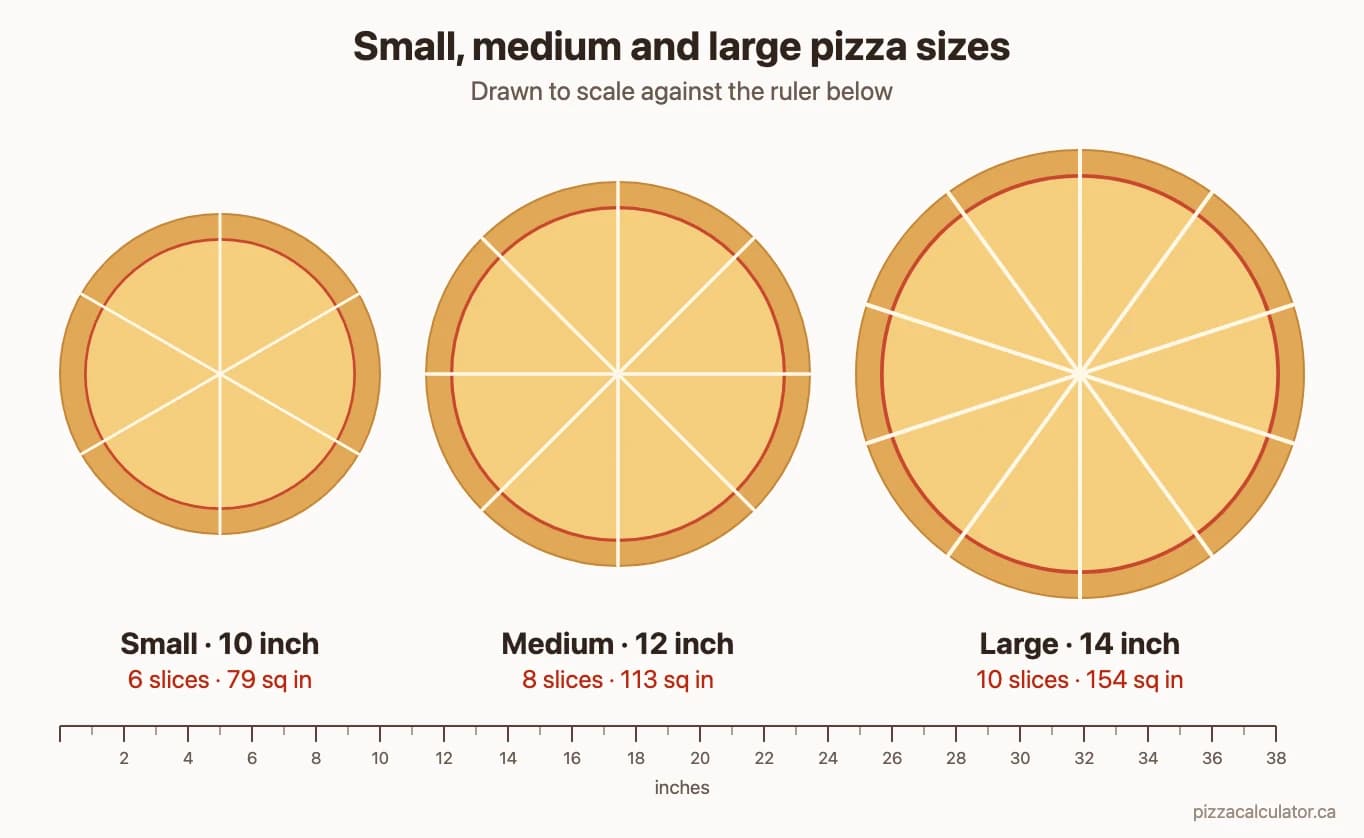
Understanding pizza sizes is crucial for making smart ordering decisions, whether you're feeding a family or planning a large party. With different chains using varying size standards and pricing structures, knowing how to compare pizza sizes can save you money and ensure everyone gets their fill.
Standard Pizza Size Measurements
Pizza sizes are measured by diameter, but the actual amount of pizza you get increases exponentially as the diameter grows. This is because pizza area is calculated using πr² (pi times radius squared), meaning a small increase in diameter results in a much larger pizza.
Industry Standard Sizes
Small Pizza
10-12"
6 slices
Serves 1-2 people
Medium Pizza
12-14"
8 slices
Serves 2-3 people
Large Pizza
14-16"
10 slices
Serves 3-4 people
The Mathematics of Pizza Value
To understand pizza value, you need to consider the actual area of pizza you're getting. Let's break down the math:
Pizza Area Calculations
Area comparison at the most common diameter in each range
A 14-inch large has almost twice the area of a 10-inch small, for nowhere near twice the price.
Value Per Square Inch
The best way to compare pizza value is to calculate the cost per square inch. Here's a hypothetical example with common pricing:
Small Pizza
$8.99 / 79 sq in
$0.114
per square inch
Medium Pizza
$12.99 / 113 sq in
$0.115
per square inch
Large Pizza
$15.99 / 154 sq in
$0.104
per square inch
BEST VALUE
Chain-by-Chain Size Comparison
Different pizza chains have their own sizing standards. Here's how major chains compare:
Domino's Pizza Sizes
Small: 10" (6 slices)
Serves: 1-2 people
Medium: 12" (8 slices)
Serves: 2-3 people
Large: 14" (8 slices)
Serves: 3-5 people
Pizza Hut Sizes
Personal: 6" (4 slices)
Serves: 1 person
Small: 8" (6 slices)
Serves: 1-2 people
Medium: 12" (8 slices)
Serves: 2-3 people
Large: 14" (8 slices)
Serves: 3-5 people
Papa John's Sizes
Small: 10" (6 slices)
Serves: 1-2 people
Medium: 12" (8 slices)
Serves: 2-3 people
Large: 14" (8 slices)
Serves: 3-5 people
When to Choose Each Size
Small Pizzas: Best For
- Individual meals: Perfect for one person's dinner
- Variety testing: Trying different flavors without commitment
- Children's parties: Kid-sized portions
- Appetizers: Small bites before the main meal
- Diet control: Built-in portion control
Medium Pizzas: Best For
- Couples: Perfect for two people with average appetites
- Lunch meetings: Good size for small office gatherings
- Family with young children: Right amount for 2 adults + 1-2 kids
- Date nights: Sharing without too many leftovers
- Variety orders: When you want multiple flavors
Large Pizzas: Best For
- Families: Best value for feeding 3+ people
- Game day gatherings: Hungry sports fans
- Office parties: Maximum bang for your buck
- Teenagers: High appetite groups
- Meal planning: Leftovers for tomorrow's lunch
Optimization Strategies
The Two Medium vs One Large Debate
How the two orders compare
Two medium pizzas (12" each)
- Total area: 226 square inches
- Total slices: 16
- Variety: two different flavours
One large pizza (14")
- Total area: 154 square inches
- Total slices: 10
- Variety: one flavour only
Conclusion: two mediums give you about 47% more pizza and a second flavour; one large is usually the cheaper order. Which wins depends entirely on the prices on your local menu, so work out the price per square inch before you order — chain prices vary too much by city for a fixed example to be any use.
Smart Ordering Tips
- Calculate cost per square inch before ordering
- Consider appetite levels of your group
- Factor in desired variety - multiple smaller pizzas allow for different toppings
- Think about leftovers - do you want them or not?
- Check for size-specific deals that might change the value equation
- Consider the occasion - formal dinner vs casual party affects sizing needs
Special Considerations
Crust Thickness Impact
Thicker crusts make each slice more filling, potentially changing how many slices people will eat. A thick-crust small pizza might be more satisfying than expected, while thin-crust large pizzas might require more slices per person.
Topping Distribution
Larger pizzas often have better topping distribution and may taste more balanced. The ratio of crust to toppings tends to be more favorable on larger sizes.
Group Dynamics
Consider your group's eating style. Some people prefer to try multiple slices of different varieties, while others stick to their favorite. This preference should influence whether you choose fewer large pizzas or more smaller ones.
Take the Guesswork Out of Pizza Ordering
Use our pizza calculator to determine the optimal size and quantity for your specific group, considering all these factors automatically.
Calculate Your Pizza OrderPizza Size Quick Reference
- Large pizzas typically offer the best value per square inch
- Medium pizzas are ideal for couples and small families
- Small pizzas work well for variety and portion control
- Always calculate cost per square inch for true value comparison
- Consider your group's appetite, variety preferences, and leftover tolerance
- Factor in crust thickness when estimating satisfaction