Classic Homemade Pizza Dough: Foolproof Recipe
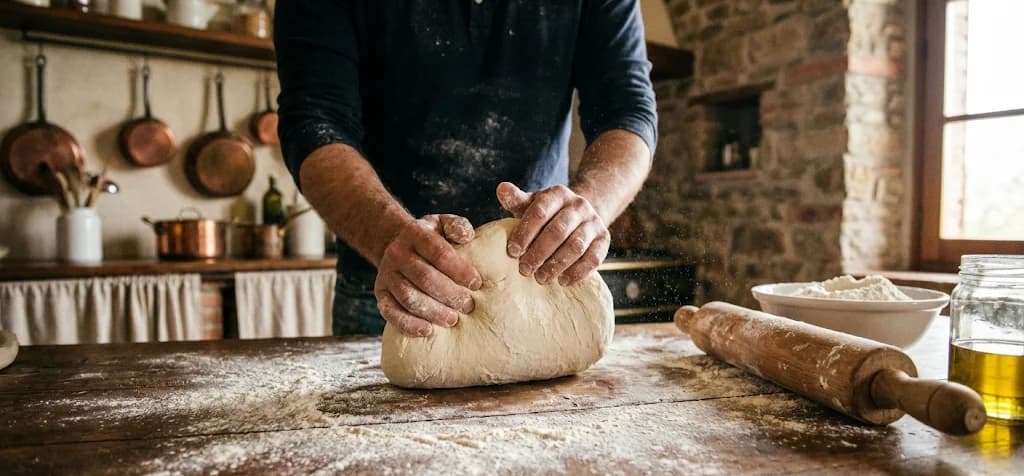
After making hundreds of homemade pizzas over the past decade, I've refined this classic pizza dough recipe into a truly foolproof formula that works every single time. Whether you're a complete beginner or experienced home cook, this recipe produces professional-quality pizza dough with a perfect balance of crispy exterior and chewy interior. Best of all, it requires just 5 basic ingredients and about 10 minutes of hands-on work, with the yeast and time doing most of the heavy lifting.
Need Different Quantities?
This recipe makes 2 large pizzas. Making more? Use our interactive calculator to get exact ingredient amounts for any number of pizzas, with options for different sizes, styles, and hydration levels.
Open Pizza Dough CalculatorRecipe Quick Facts
- Yield: 2 large (14-inch) pizza crusts or 3 medium (12-inch) crusts
- Active Time: 10 minutes
- Rising Time: 1.5-2 hours (or overnight in refrigerator)
- Total Time: 2-2.5 hours
- Difficulty: Easy
- Special Equipment: Stand mixer recommended but not required
Ingredients
- 4 cups (500g) all-purpose flour - bread flour works too for chewier crust
- 1½ cups (350ml) warm water - 105-115°F, crucial for yeast activation
- 2¼ teaspoons (1 packet) active dry yeast - or instant yeast, both work
- 2 tablespoons olive oil - adds flavor and tenderness
- 2 teaspoons salt - enhances flavor, controls yeast
- 1 teaspoon sugar - feeds yeast, helps browning
These proportions create the perfect dough consistency. Don't be tempted to adjust ratios on your first attempt - this recipe has been tested hundreds of times and the measurements are precise for optimal results.
Step-by-Step Instructions
Step 1: Activate the Yeast (5 minutes)
- Heat water to 105-115°F (test with thermometer or finger - should feel like warm bath water, not hot)
- Pour warm water into large mixing bowl
- Sprinkle yeast and sugar over water surface
- Let sit undisturbed for 5-10 minutes until foamy and bubbly
Critical Tip: Water Temperature
Too hot (above 120°F) kills yeast instantly. Too cold (below 100°F) yeast won't activate properly. The 105-115°F range is the sweet spot. If you don't have a thermometer, warm water should feel comfortably warm on your wrist, like baby bath water.
Step 2: Mix the Dough (5 minutes)
- Add olive oil and salt to yeast mixture, stir briefly
- Add flour one cup at a time, stirring after each addition
- After 3 cups, dough becomes thick - switch to hands or dough hook
- Add final cup of flour gradually until dough pulls away from bowl sides
- Dough should be slightly sticky but manageable - not dry and crumbly
Stand Mixer Method: Use dough hook attachment on medium-low speed for 5-6 minutes until dough is smooth and elastic. This is easier but not required.
Hand Method: Turn dough onto lightly floured surface and knead for 8-10 minutes until smooth. Good arm workout!
Step 3: First Rise (1.5-2 hours)
- Lightly oil a large bowl with olive oil
- Form dough into ball and place in bowl, turning to coat with oil
- Cover bowl with plastic wrap or damp kitchen towel
- Place in warm, draft-free spot (70-75°F is ideal)
- Let rise until doubled in size, approximately 1.5-2 hours
Warm Spot Ideas
- Oven with light on (do not turn oven on, just the light creates warmth)
- On top of refrigerator (heat from fridge motor creates warm spot)
- Near (but not on) warm stovetop
- In microwave with cup of hot water beside it
Step 4: Punch Down and Divide (2 minutes)
- Punch down risen dough to release air bubbles (literally punch it - satisfying!)
- Turn dough onto lightly floured surface
- Divide into 2 equal portions for large pizzas (or 3 for medium pizzas)
- Shape each portion into smooth ball by folding edges under
Step 5: Rest Before Shaping (15-30 minutes)
Let dough balls rest for 15-30 minutes at room temperature. This relaxes gluten and makes stretching much easier. Cover with kitchen towel to prevent drying.
Step 6: Shape Your Pizza
- Preheat oven to 475-500°F (as hot as your oven goes)
- Place dough ball on lightly floured surface
- Press down with fingers to flatten into disk, leaving outer rim thicker
- Gently stretch dough by draping over knuckles and rotating
- Continue stretching until 12-14 inches diameter with ¼-inch thickness
- Transfer to pizza pan, baking sheet, or pizza peel with cornmeal
Pro Stretching Tip
Never use a rolling pin on pizza dough - it compresses air pockets and creates dense, tough crust. Always stretch by hand using gravity and gentle pulling. If dough springs back excessively, let it rest another 5-10 minutes for gluten to relax.
Baking Instructions
- Top Your Pizza: Add sauce, cheese, and toppings (don't overload - less is more for crispy crust)
- Bake: 12-15 minutes at 475-500°F until crust is golden and cheese is bubbly
- Cool: Let pizza rest 2-3 minutes before slicing (helps cheese set slightly)
- Slice and Serve: Cut into 8-10 slices depending on size
Baking Surface Options
- Pizza Stone: Preheat stone in oven 30 minutes, creates crispiest bottom crust (my preference)
- Pizza Steel: Even better heat retention than stone, more expensive
- Baking Sheet: Perfectly acceptable, lightly oil or use parchment paper
- Cast Iron Skillet: Creates deep-dish style crust with crispy edges
Make-Ahead and Storage Options
Refrigerator Method (Best Flavor)
After Step 2 (mixing), place dough ball in oiled container, cover, and refrigerate overnight (8-72 hours). Cold fermentation develops complex flavor. Bring to room temperature 30 minutes before shaping.
Freezer Method (Up to 3 Months)
- After dividing dough (Step 4), wrap each ball tightly in plastic wrap
- Place wrapped balls in freezer bags with date labeled
- Freeze for up to 3 months
- Thaw overnight in refrigerator
- Bring to room temperature 1 hour before using
I always make double batches and freeze half. Having fresh pizza dough ready in your freezer transforms weeknight dinners.
Planning a Homemade Pizza Party?
This recipe makes 2 large pizzas. Use our calculator to determine how many batches you need for your group size, then multiply the ingredient quantities accordingly!
Calculate Pizza NeedsVariations and Customizations
Whole Wheat Pizza Dough
Replace 1 cup all-purpose flour with 1 cup whole wheat flour. Dough will be denser and nuttier. Add 1-2 extra tablespoons water as whole wheat absorbs more liquid.
Garlic Herb Pizza Dough
Add 1 tablespoon Italian seasoning and 1 teaspoon garlic powder to flour mixture. Creates aromatic, flavorful crust perfect for white pizzas.
Thin Crust Variation
Divide dough into 3-4 portions instead of 2. Roll/stretch thinner (⅛-inch thickness). Bake at 500°F for 8-10 minutes for ultra-crispy crust.
Thick Crust (Pan Pizza)
Use entire dough batch for one 13x9-inch rectangular pan. Press into oiled pan, let rise 30 minutes, then top and bake 18-22 minutes.
Troubleshooting Common Problems
Problem: Dough Didn't Rise
Causes:
- Water too hot (killed yeast) - use thermometer or test on wrist
- Expired yeast - check expiration date, proof yeast first
- Too cold environment - find warmer spot (75°F ideal)
Solution: Start over with fresh yeast and correct water temperature.
Problem: Dough Too Sticky
Causes:
- Too much water or not enough flour
- High humidity environment
Solution: Add flour 1 tablespoon at a time while kneading until dough is tacky but not sticky.
Problem: Dough Too Dry and Crumbly
Causes:
- Too much flour added
- Flour was packed too tightly when measuring
Solution: Add water 1 tablespoon at a time until dough comes together smoothly.
Problem: Crust Too Tough/Chewy
Causes:
- Over-kneaded dough (too much gluten developed)
- Rolled with rolling pin instead of hand-stretched
- Baked at too low temperature
Solution: Knead only until smooth, always hand-stretch, bake at 475-500°F minimum.
Problem: Soggy Center
Causes:
- Too many wet toppings
- Sauce too thick/wet
- Oven temperature too low
Solution: Use less sauce, pre-cook wet vegetables, increase oven temperature, use pizza stone.
Frequently Asked Questions
Can I use instant yeast instead of active dry yeast?
Yes! Use the same amount (2¼ teaspoons). The difference: instant yeast can be mixed directly into flour without proofing in water first. However, I still recommend proofing in warm water for beginners to confirm yeast is alive and active before committing all ingredients.
What's the difference between bread flour and all-purpose flour for pizza?
Bread flour has higher protein content (12-14% vs 10-12%), creating more gluten and a chewier, more elastic crust. All-purpose flour creates a slightly softer, more tender crust. Both work excellently - bread flour is more authentic to traditional pizzeria-style, all-purpose is easier to work with for beginners.
How do I know when dough has risen enough?
Perform the "poke test": gently press two fingers ½-inch into dough. If indentation remains and doesn't spring back, dough is ready. If it springs back immediately, let it rise longer. Dough should be roughly double its original size, soft and puffy to the touch.
Can I make this dough without a stand mixer?
Absolutely! I made pizza dough by hand for years before buying a stand mixer. It requires 8-10 minutes of kneading versus 5-6 minutes with a dough hook, but the results are identical. Hand-kneading also gives you better feel for dough texture and consistency.
Why does my homemade pizza never taste as good as pizzeria pizza?
Commercial pizza ovens reach 700-900°F, far hotter than home ovens (max 500-550°F). Higher heat creates charred, crispy crust that's hard to replicate at home. To get closer: use a pizza stone preheated for 30+ minutes, crank your oven to maximum temperature, and position rack in upper third of oven. You can also try the broiler method for the last 1-2 minutes of baking.
Key Takeaways
- Water temperature (105-115°F) is critical for yeast activation - too hot kills yeast, too cold prevents rising
- Recipe makes 2 large (14-inch) pizzas or 3 medium (12-inch) pizzas - multiply recipe for larger parties
- Cold fermentation in refrigerator (overnight to 3 days) develops superior flavor and texture
- Always hand-stretch dough, never use rolling pin - preserves air pockets for lighter crust
- Bake at maximum oven temperature (475-500°F) for 12-15 minutes for best results
- Dough freezes perfectly for up to 3 months - make double batches for future convenience
Written by Jas Rowinski
Creator of PizzaCalculator.ca
Software developer from British Columbia, Canada. Built this tool after a conversation with friends about how many pizzas to order—turned out to be a fun project that people actually use.
Related Articles
How Many Pizzas Do You Need? Quick Reference Guide
Quick pizza calculator for any group size. See exactly how many large pizzas to order for 10-50 people.
Read ArticlePizza Size Comparison: Small vs Medium vs Large
Compare pizza sizes across different chains and understand which size offers the best value for your money and group size.
Read ArticleHow Many Slices Are in a Pizza? The Complete Guide
Understanding pizza slice counts is crucial for party planning. Learn the standard slice counts for small, medium, and large pizzas.
Read Article